

Let’s eat!
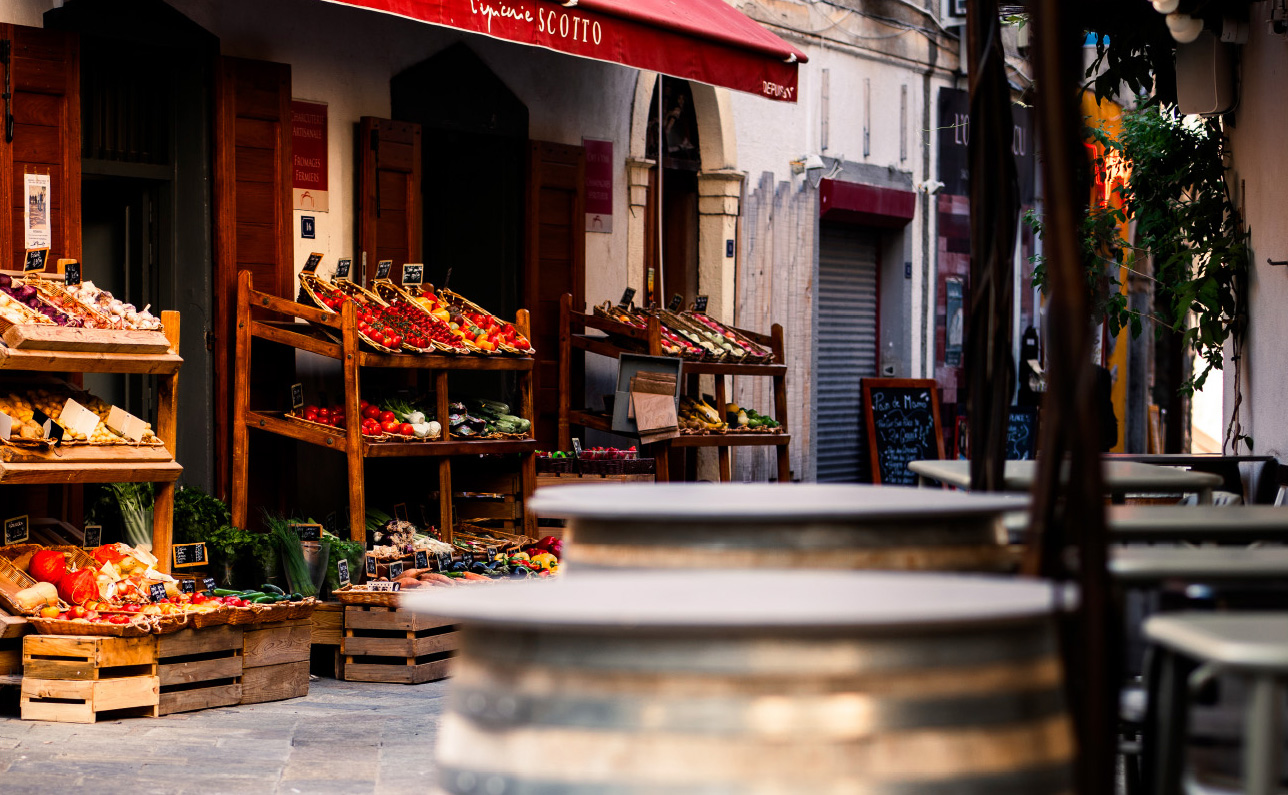
Starter, main course, cheese and dessert: here, we don’t serve fakes…
Whether you are a young or seasoned foodie, there is something to delight every palate. From chestnuts to brocciu, via honey and traditional cured meats, Corsica offers a rich spectrum of flavours shaped by ancestral know-how and a remarkably well-preserved natural environment.
Restaurants, bistros, bakeries, delicatessens, wine bars and pastry shops invite you to discover and savour local specialities. And when it comes to Corsican cuisine, certain dishes inevitably come up in the conversation. Here is a brief overview…
Corsican cured meats and cheeses: the taste of a land with a strong
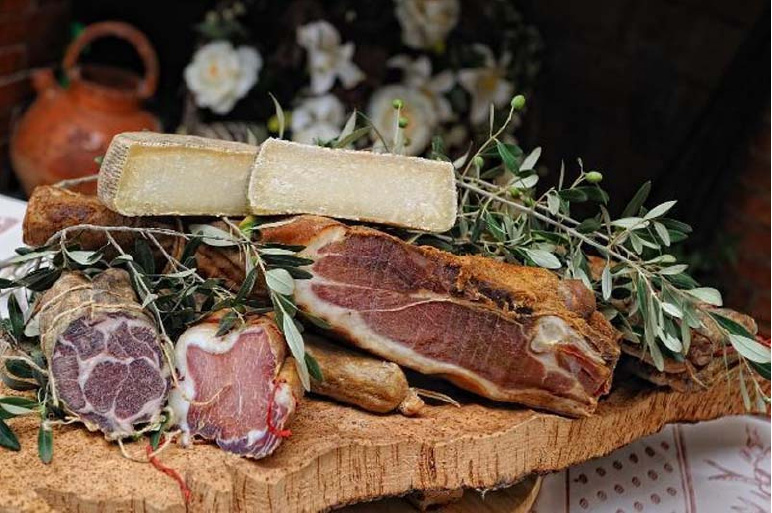
Corsican cured meats are robust and full-bodied: Coppa, Lonzu, Panzetta, Bulagna… All are produced from pigs raised free-range and fed on chestnuts. These delicacies are best enjoyed simply as they are, sometimes drizzled with a touch of honey, served on crusty bread and accompanied by a glass of local wine.
As for Corsican cheeses—such as Brocciu, Niolo, A Casinca and Bastelicacciu—they share, much like the Corsicans themselves, a strong and distinctive character.
In southern Corsica, there is also a cheese that attracts a great deal of attention: Casgiu Marzu (or Merzu). Strictly speaking, it is more of a cheese preparation than a conventional cheese, and it has the unique—and delicate—feature of being created with the help of live larvae.
Its name literally means “rotten cheese.” It is made from a goat’s or sheep’s milk cheese left to mature in open air, in a place frequented by flies. Their larvae develop within the cheese, accelerating the maturation process by creating small tunnels throughout the wheel.
And yes—the answer is YES, it is eaten with the larvae still inside! At least, that is one option. For those less keen on wriggling guests, the cheese can be soaked in brandy to drive them out… An experience somewhere between a cult French ski comedy and a survival adventure show!
Main courses: recipes born long before… the microwave!
Among the emblematic dishes of Corsican cuisine—particularly enjoyed in winter—is the famous Corsican soup with Figatellu. This hearty dish is prepared with Figatellu (a pork liver sausage), fresh vegetables, aromatic herbs and crusty bread.
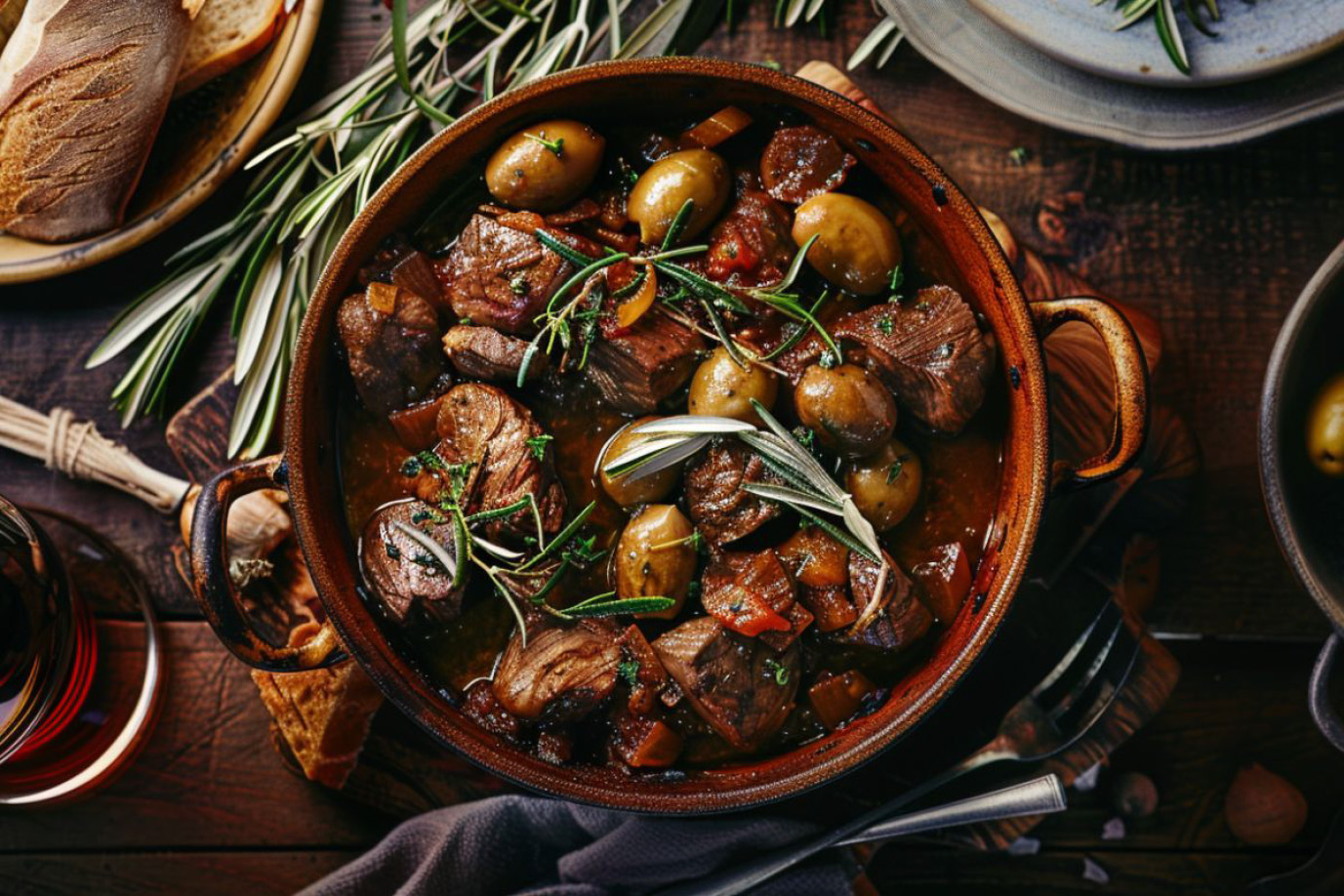
Another must-try is wild boar stew (civet de sanglier). Hunted in the Corsican mountains, the boar is slowly simmered with vegetables, red wine and spices, resulting in tender, flavourful meat. It is traditionally served with polenta or fresh pasta.
One cannot overlook this refined, sauce-based classic: veal sautéed with olives, also known as Veal à la Corse. A true star of traditional island cuisine, it is prepared with bacon lardons, garlic, onion, white wine, a touch of flour, fennel seeds, bouquet garni and tomatoes, alongside veal and green olives. It pairs beautifully with pasta, potatoes or polenta.
Desserts: when sweetness goes off the beaten path!
Desserts from the Île de Beauté are irresistible treats to enjoy during your stay in Corsica. But beware—Corsican pastry-making follows the rhythm of seasonal produce and long-standing traditions.
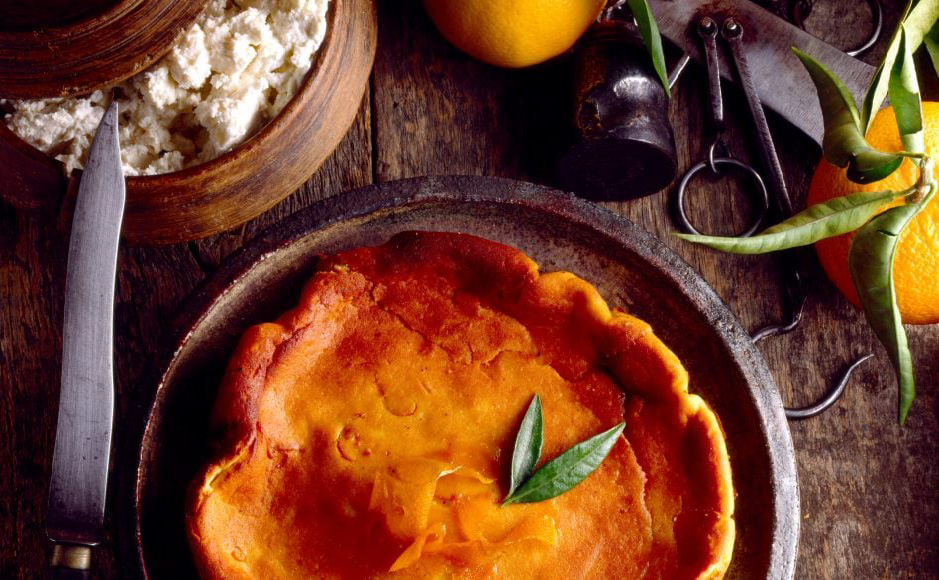
The Fiadone is the island’s signature dessert. With a texture similar to cheesecake and subtle lemon notes, it is traditionally enjoyed in winter, as it is primarily made with Brocciu. A summer variation exists, replacing Brocciu (produced only from November to May) with fresh Brousse cheese.
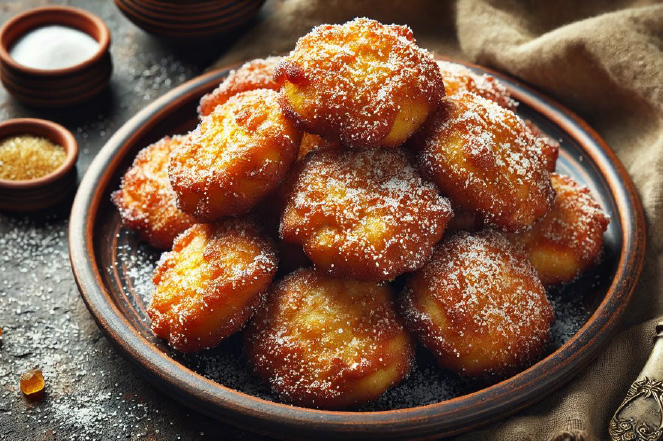
Brocciu fritters in winter (and Brousse fritters in summer) resemble frappes, cousins of bugnes or oreillettes. Flavoured with lemon, orange, rum, orange blossom—or simply plain—they can be found at Corsican markets, where artisans proudly offer their ancestral recipes. In Bastia, on Market Square on Sunday mornings, you will find both the traditional version and an apple-filled one… absolutely irresistible!
You can also enjoy Corsican fritters (fritelli), amaretti (dry almond biscuits), hazelnut nougats, canistrons (brioche-style biscuits), and finucchjetti, all of which have earned their place among Corsica’s culinary treasures.
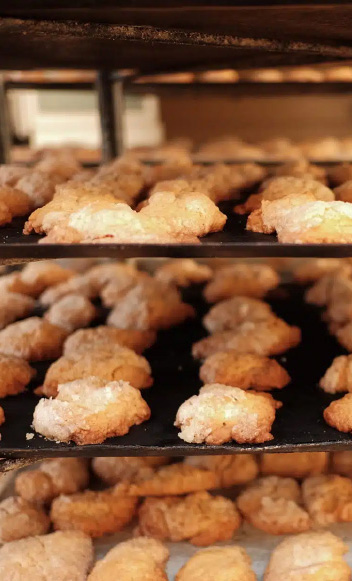
And finally, do we really need to introduce the Canistrelli—Corsica’s quintessential biscuits? They are simply unavoidable during your stay. Available everywhere, their recipes vary from one artisan or producer to another. Made from flour, yeast, oil and sugar, they come in countless variations: plain with white wine, almond, hazelnut, lemon, fig, clementine…
Another essential delight: chestnut cake. Found almost everywhere—grocery shops, markets and delicatessens—it is often enjoyed with a Corsican citrus sauce or Brocciu ice cream.